On this page
Almost everyone has felt the burn of heartburn after a big meal. But when that burning feeling shows up several times a week, wakes you at night, or keeps coming back as soon as you stop your antacids, it may be more than "just heartburn." It may be GERD, and it is very treatable.
What is GERD?
GERD stands for gastroesophageal reflux disease. Your esophagus is the food pipe that carries food from your mouth to your stomach. Where the two meet, a ring of muscle acts like a one-way valve. In GERD, that valve relaxes when it should not, and stomach acid washes back up into the food pipe.
GERD is one of the most common digestive conditions in the country. In a national survey of more than 71,000 US adults, about 2 in 5 said they had experienced reflux symptoms at some point, and nearly 1 in 3 had symptoms in the past week.
Symptoms
The two classic symptoms are:
- Heartburn: a burning feeling behind the breastbone, often after meals or when lying down.
- Regurgitation: sour or bitter fluid coming back up into the throat or mouth.
Some people have less obvious symptoms, such as a long-lasting cough, hoarseness, or frequent throat clearing. Reflux can also cause chest pain that feels exactly like heart pain.
Call us promptly if you have:
- Trouble swallowing, or food that feels stuck
- Pain when swallowing
- Weight loss you cannot explain
- Vomiting that does not stop
- Black, tar-like stools or vomiting blood
- A low blood count (anemia)
What causes it?
Several things make reflux more likely:
- Extra body weight, especially around the belly
- Smoking
- Age over 50
- Regular use of anti-inflammatory pain relievers (such as ibuprofen or naproxen)
- A hiatal hernia, where the top of the stomach slides up into the chest
- Pregnancy
- Large or late meals
Many people also notice their own trigger foods. Common ones include fatty or fried food, chocolate, coffee, alcohol, mint, tomato, and citrus. Triggers differ from person to person, so there is no single "GERD diet."
How is GERD diagnosed?
For most people with classic heartburn and no warning signs, no test is needed at first. Guidelines from the American College of Gastroenterology recommend an 8-week trial of an acid-blocking medicine called a proton pump inhibitor (PPI), such as omeprazole or pantoprazole, taken once a day. If your symptoms go away, your doctor will usually help you try to stop or lower the medicine.
You may need testing if:
- You have any of the warning signs listed above
- Your symptoms do not improve after the 8-week trial
- Your symptoms come back when the medicine is stopped
- You have chest pain, cough, or hoarseness without typical heartburn
- You have several risk factors for Barrett's esophagus (a change in the lining of the food pipe)
Upper endoscopy (EGD). While you are sedated, a thin, flexible tube with a camera is passed through the mouth to look at the food pipe and stomach. The doctor checks for irritation, narrowing, or changes in the lining, and can take small tissue samples. The test takes about 10 to 15 minutes. About two-thirds of people with GERD have a normal-looking endoscopy, and that is good news, not a sign that nothing is wrong.
Acid (pH) monitoring. If the picture is still unclear, a small sensor can measure how much acid reaches your food pipe over 1 to 4 days. This test confirms whether acid is truly the cause of your symptoms.
Treatment options
Everyday changes that help
- Lose weight if you are overweight. This is the lifestyle change with the strongest evidence.
- Do not eat within 2 to 3 hours of bedtime.
- Raise the head of your bed by 6 to 8 inches if symptoms bother you at night. Extra pillows alone usually do not work.
- Stop smoking and vaping tobacco.
- Avoid your personal trigger foods. You do not need to cut out foods that do not bother you.
Medicines
- Antacids (such as Tums) work fast but briefly. They are fine for occasional symptoms.
- H2 blockers (such as famotidine) lower acid for several hours.
- PPIs (such as omeprazole, esomeprazole, pantoprazole) are the most effective medicines for healing an irritated food pipe and keeping it healed. Timing matters: take a PPI 30 to 60 minutes before a meal, usually breakfast, not at bedtime.
- Vonoprazan is a newer type of acid blocker. Experts generally reserve it for severe irritation of the food pipe or for people who do not improve on PPIs.
Procedures
A small number of people need more than medicine, usually because of a large hiatal hernia, severe irritation, or regurgitation that pills do not control. Options include:
- Anti-reflux surgery (fundoplication), done through small incisions, which rebuilds the valve
- A magnetic ring (LINX) placed around the lower food pipe to strengthen the valve
- Transoral incisionless fundoplication (TIF), which tightens the valve from the inside using an endoscope, with no cuts on the skin
- Gastric bypass surgery for people who also have obesity
Before any procedure, testing is done to prove that reflux is truly the problem and that the food pipe squeezes normally.
Why treating GERD matters
Untreated, ongoing reflux can cause:
- Esophagitis: irritation and sores in the food pipe
- Strictures: scar tissue that narrows the food pipe and makes swallowing hard
- Barrett's esophagus: a change in the lining that slightly raises the risk of esophageal cancer, found in roughly 5% to 12% of people with GERD
The good news is that treatment relieves symptoms and heals the lining in the great majority of people.
How Platinum Digestive Health can help
Our team evaluates ongoing heartburn, performs upper endoscopy (EGD) when it is needed, and builds a treatment plan that fits your life. Platinum Digestive Health offers upper endoscopy (EGD), colonoscopy, endoscopic ultrasound (EUS), ERCP, capsule endoscopy, removal of large colon polyps, FibroScan, and anorectal manometry. To schedule a visit, call 909-655-0300 or go to www.pdhgi.com.
Frequently asked questions
You may have read headlines linking PPIs to bone fractures, kidney disease, dementia, and other problems. Those reports come from studies that cannot prove cause and effect. In a large, high-quality trial of more than 17,000 people, the only problem seen more often with a PPI was intestinal infections, and the difference was small. For people who truly need a PPI, experts agree the benefits outweigh the possible risks. The goal is the lowest dose that controls your symptoms.
Related services
Have questions about your digestive health?
Our gastroenterology team sees patients in Rancho Cucamonga, Pomona and Chino. Call us or request an appointment online.
Sources (4)
- Katz, Philip O., et al. "ACG Clinical Guideline for the Diagnosis and Management of Gastroesophageal Reflux Disease." American Journal of Gastroenterology, 2022.
- Delshad, Sean D., et al. "Prevalence of Gastroesophageal Reflux Disease and Proton Pump Inhibitor-Refractory Symptoms." Gastroenterology, 2020.
- Fass, Ronnie. "Gastroesophageal Reflux Disease." New England Journal of Medicine, 2022.
- Dunbar, Kerry B. "Gastroesophageal Reflux Disease." Annals of Internal Medicine, 2024.
This article is for education only and does not replace an evaluation by your own clinician.
More from our blog
All articles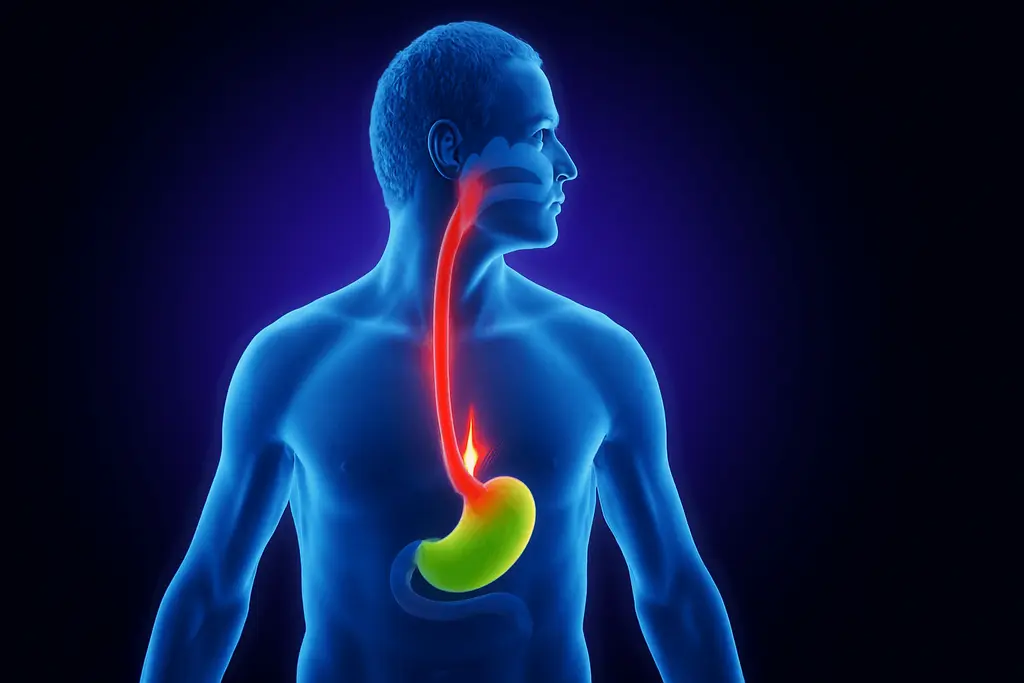
Understanding GERD (Acid Reflux): Causes, Symptoms & Effective Treatments
Understanding Bloating: Causes, Symptoms & Effective Treatments